

INDIAN TEXTILES
One of the world's oldest textile traditions
The story of Indian textiles reaches back to the Indus Valley civilization, where people spun cotton by hand and colored it with indigo. Over the centuries, Indian cloth traveled to Rome, China and Egypt, and cotton fragments from Gujarat have been found in medieval tombs at Fustat.
Today, from the Rann of Kutch to the Coromandel Coast, handloom weavers, block printers, dyers and embroiderers still make some of the most extraordinary textiles in the world. Gingerblu carries those traditions forward for a new generation.
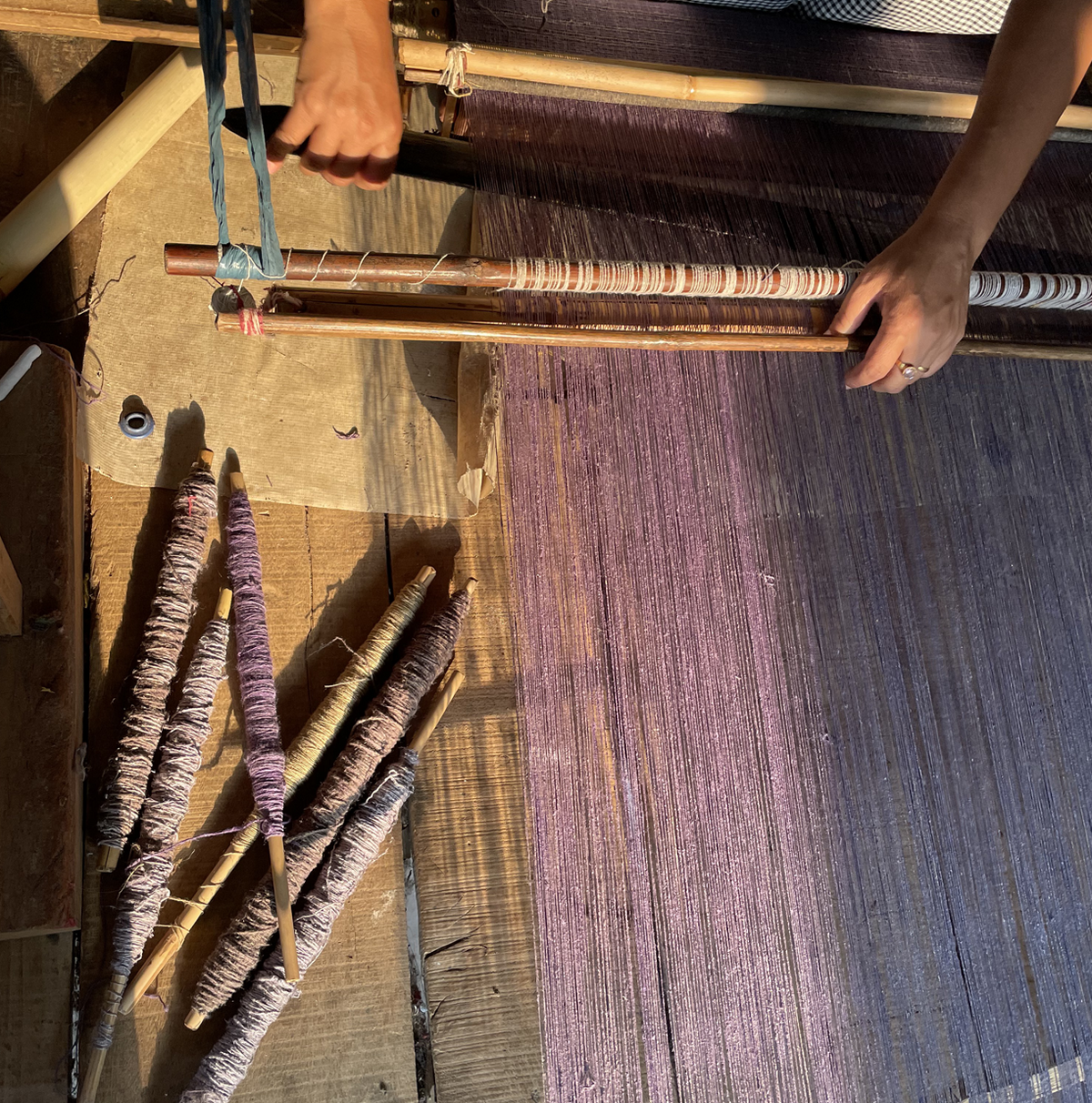
THE HANDLOOM PROCESS
Nine steps from fiber to fabric
Raw material selection
Raw material to yarn conversion
Bobbin winding and warping
Sizing of warp yarns
Dressing and winding of warp yarns
Attaching warp yarns to the loom
Weft yarn winding
Weaving the fabric on a handloom
Final handloom products

HAND BLOCK PRINTING
Printed by hand, one block at a time
Block printing is one of India's most celebrated crafts, and Jaipur is at its heart. Designs are carved by hand into wooden blocks, dipped in dye and stamped along lengths of cloth. Our blocks are carved from teak and last for decades, and we print with azo-free dyes.
Techniques and materials
Techniques glossary
Cotton, linen, bamboo, jute and hemp. They are biodegradable, so each textile returns to the soil at the end of its life.
Also called natural black cotton: a rain-fed, pesticide-free cotton grown in northwestern India.
The plant dye India's textile makers have used for thousands of years, giving our deep blues.
A natural yellow dye made from turmeric root.
Designs stamped by hand onto cloth with hand-carved wooden blocks.
A traditional block-printed textile from Kutch and Sindh, known for its geometric patterns in deep indigo and red.
Hand-carved blocks are dipped in hot wax and pressed onto the fabric, which is then laid on a bed of sand for a granulated texture. The waxed areas resist the dye, leaving one-of-a-kind patterns.
A mud-resist printing technique that keeps parts of a design free from dye.
A light, open handwoven fabric from Kota in Rajasthan, known for its small woven checks.
Pieces stitched together by hand from upcycled fabric.
Our printed textiles use azo-free dyes, which keep their colour longer than natural dyes that can fade after a few washes.